EU calls on Israel to respect ceasefire and stop strikes on Lebanon, will it work?

Doubts remain about the scope of the ceasefire in the Middle East. After more than a month of war, the United States and Israel on one side, and Iran on the other, agreed to a ceasefire overnight from Tuesday to Wednesday. But while the agreement was supposed to cover the entire region, Israel continues to attack southern Lebanon. This is cause for concern not only for the country itself, but also for Europeans.

Other episodes

February 2, 2026
In Poland in 2024, 99% of abortions took place outside hospitals, outside the legal framework. Polish women find alternatives to the near-total ban on abortion, but...
March 30, 2026
Only eight European countries have banned conversion practices. These so-called therapies often lead to PTSD, but they can go as far as driving young people to...
March 31, 2026
Respect for the rule of law in the EU is seriously eroding. This is what a report compiling data from 40 organisations across the continent has...
April 1, 2026
Israel has just passed a law reinstating the death penalty. This measure not only reverses a fundamental principle, but also discriminates against Palestinians. Because capital punishment...
April 2, 2026
NATO is once again under fire from American threats. U.S. President Donald Trump is furious over the EU’s repeated refusals to support – even indirectly –...
April 3, 2026
French bread could be more dangerous than what’s on the table in neighboring countries. Why ? Because of cadmium, a toxic heavy metal lurking in everyday foods....
April 6, 2026
There is no episode of Briefed for this Easter Monday. But I’m directing you to a podcast that I enjoyed very much: The Right kind of family....
April 7, 2026
The EU has nearly half a million people in prison. In many European countries, prisons are seriously overcrowded. Yet over the last decade, violent crime has...
April 8, 2026
Consumers are being squeezed by skyrocketing fuel and gas prices. Meanwhile, producers are raking in extraordinary profits. The situation is unfair – and a few European...
April 10, 2026
In only nine days, between March twenty-eighth and April fifth, five boats sank in the Mediterranean. They were carrying people hoping to cross the sea and...

Other podcasts

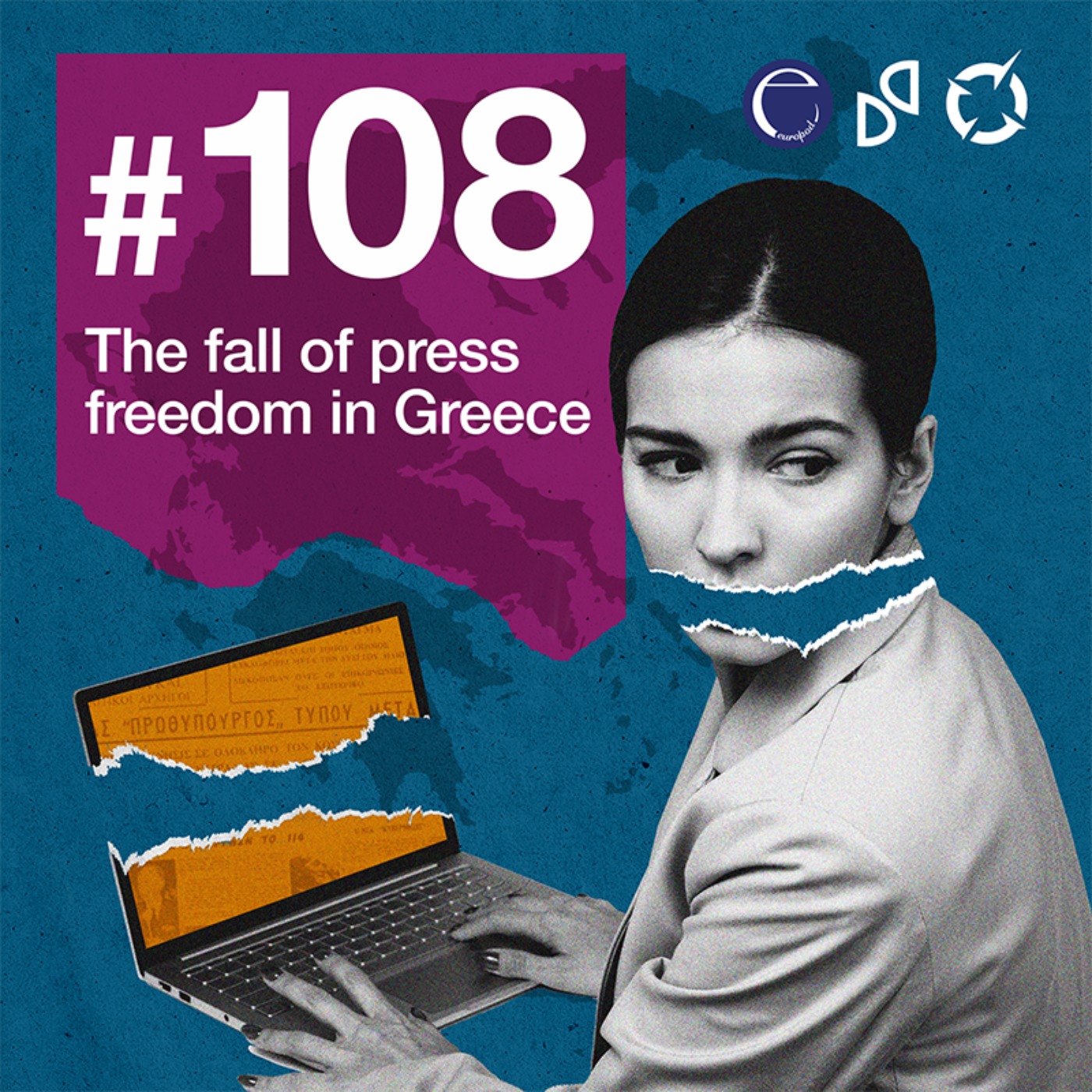
Thirty-eight places worse than in 2021 and last in the ranking of EU countries, press freedom in Greece is undoubtedly in free fall. According to the annual report of Reporters Sans Frontières (RSF), in a total of 180 countries, the country referred to internationally as the matrix of democracy has plummeted in just one year from 70th to 108th place in 2022. In the following six episodes, Greek journalists Konstantinos Poulis and Jenny Tsiropoulou will take us inside newsrooms to see the working conditions in the media, investigate the unsolved murder of a journalist at the door of his house, talk to journalists-victims of SLAPPS and journalists-victims of phone tapping, and they will talk to us about a completely opaque process of public funding to find out what the 108th place means in practice and to ask who benefits from journalism that is feared and silenced. We would like you to know that the present government has systematically failed to respond to requests from journalists from unfriendly media. In such cases, we report on it in our editorials. #108 is a co-production between the Greek independent media The Press Project and the podcast production agency Bulle Media. The podcast series is part of the Europod podcast network and was produced under the Sphera project. The original language of this podcast is Greek. There is also available an English version. The producer of 108 is Antoine Lheureux. Executive producers are Konstantinos Poulis and Alexander Damiano Ricci. Scriptwriting is by Jenny Tsiropoulou. Interviews by Jenny Tsiropoulou and Konstantinos Poulis. Editorial work by María Dios and Alexander Damiano Ricci. Sound design by Thomas Kusberg. Editing and mixing by Thomas Kusberg and Jeremy Bocquet.
Artificial intelligence is all around us. It has technological applications that save lives, but it can also affect them in ways we all too often ignore. It has created jobs that did not exist, but it also raises fears for the future of employment. Today, artificial intelligence can be used to make anything: a start-up, a cyberwar and even a work of art. This podcast is all about the A.I. revolution, amidst market bubbles, problems that the European Union is trying to correct, potential and dystopian scenarios, because algorithms replicate the distortions of the society that conceived them.

Stay tuned!
Subscribe to
our newsletter