N°87 — Schools out already?
|
|
|
 |
© Anna Rabko — Sphera Network
|
|
|
|
|
The start of this school year has had a revolutionary feel to it. From France to Italy, to Spain, Germany, Belgium, and Greece, high school students have been taking to the streets to express their anger about their learning conditions and concerns about their future. Among their demands is the renovation of school buildings that have fallen into disrepair over the years. In Athens in early October, a gas leak forced the capital’s largest school complex to close its doors for a month. It’s here that Vicky teaches English to college students.
|
|
— ATHENS, 11 NOVEMBER 2026
|
Can you recall your school days as a child or teenager? I imagine you can, even if perhaps not all your memories are good ones! You might remember the pressure, the stress, the exams, the horrible homework and all those things you desperately wanted to leave behind. At the same time, though, I bet you also remember the good times: the laughter, the school trips and the friendships you built and may still have kept in adulthood. Am I right?
Nevertheless, I doubt if any of you can recall being evacuated from lessons on a sunny day in early October, because of a strange gas smell nearby. Sounds crazy, doesn’t it?
Well, this is exactly what happened in my school, which is part of the biggest public school complex in Athens, “the Grava complex” in the heart of the city. Since it was built in the late 1970s, Grava has seen several turbulent school sit-ins especially in the 1980s and 1990s. Today, it accompanies 4 to 18+ year-olds through nursery, primary school, secondary school, sixth form college or vocational school, or in its special education school.
You may be wondering how and why the gas problem occurred, whether there had been any previous warnings or alarms, and, above all, how something like this could happen in 2026 at a school complex attended by nearly 4,000 pupils and around 500 teachers and support staff.
|
| |
|
For three weeks those 4,000 children had to turn to online classes until their school buildings were thoroughly checked.
|
| |
|
I personally experienced these events for a whole month from the “evacuation day” on the 2nd of October, until the 2nd of November when we were finally able to get back our regular school routine.
I myself am not a student – I’m a high school teacher who has been working at the “Grava complex” since 2017. To my mind, Grava resembles a castle that protects young people’s dreams, strengthens their thoughts and aspirations and prepares them for the vast world outside! For the past month, however, my colleagues, my teenage students, and their parents had to go through this rather extraordinary situation.
We, the teachers, have become deeply concerned since having to deal with this unexpected event. We had to manage our fears of the real or potential danger, as well as addressing the students and parents questions and concerns; concealing our own emotions while teaching online classes that lasted for 3 weeks.
And we were completely shocked when we found out that we had been working in school buildings where reportedly “for more than 20 years, there has been no systematic oversight of some installations….” The investigation by the Technical Chamber of Greece uncovered serious deficiencies in the natural gas installations, including a non-functioning gas detection system, a non-functioning manual gas supply shut-off system, discrepancies between the approved plans and the actual installations, and a failure of compliance with certain mandatory safety standards.
|
| |
To be honest, it’s been a whirlwind of emotions: from nervousness and anxiety to disappointment and anger!
|
| |
|
Where is the accountability when it comes to public infrastructure like hospitals, schools, universities, roads, means of transport etc?
This was far from an isolated case of deteriorating school infrastructure in Greece. In recent years, media reports have documented a series of incidents across the country. From collapsing ceilings, to falling plaster and doors in schools in Aigaleo, Palaio Faliro, Porto Rafti, Volos and Thessaloniki -to name a few- to a boiler-room explosion in Serres that killed an 11-year-old pupil and injured two others. There were at least 12 such incidents registered in the 2023-2024 school year alone. And the problems persist: on the 7th October 2026 ceiling plaster fell on pupils in a Lamia school; on the 9th, a similar incident in Thessaloniki sent a 14-year-old pupil to the hospital, while ten days later a large piece of plaster fell from the main entrance ceiling of a recently renovated school in Athens, onto the staircase.
I’m not sure whether to leave you on an optimistic or pessimistic note. In my 25-year-teaching career, I’ve learnt to trust the beauty of the learning process and I believe in the power of independent thinking, so I’m not going to push you in either direction. It’s up to you to consider whether as citizens we should merely feel let down by the “system”, or utilise our powers to demand changes in a democratic society. The decision is ours!
|
— VICKY
*This interview was conducted by Despina Papageorgiou, a journalist for our Greek partner Popaganda
|
| |
|
|
|
🛠️ Ressources to help you to take action
|
🇫🇷 The USL is the leading high school student union in France. It aims to defend the rights and interests of high school students by offering them a democratic, inclusive union structure grounded in antifascist, feminist, environmentalist, and collectivist values. 🇧🇪 The Comité des élèves francophones (CEF) is the student organization of the French Community of Belgium that defends students’ interests and represents their views at a government level. 🇮🇹 In its “Diritti” section, the media outlet VD News covers student protests and their demands. – The Rete degli Studenti Medi (RSM) is Italy’s leading student union. It works to ensure respect for students’ rights, improve their learning conditions, and promote a public and democratic education system. 🇬🇧 Rethink Repayment is a a grassroots, graduate-led campaign fighting for a fairer student loan repayment system that will help young people better invest in their future.
|
|
|
| |
|
Our picks
|
|
A song, a film, signs, and posters:
|
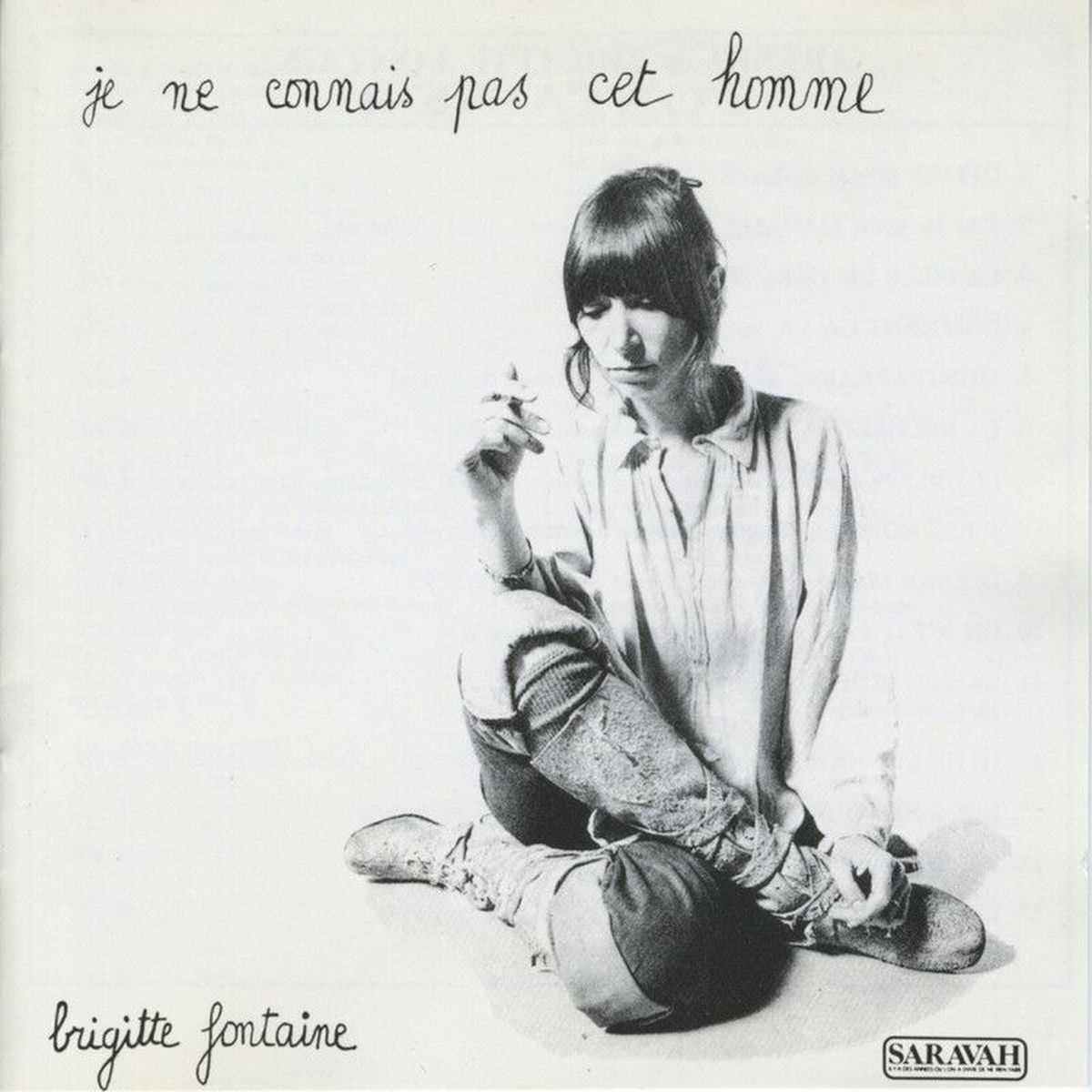
This gas leak, the effect it had on Vicky, her colleagues, and her students, the even more terrible consequences it could have had and the inaction of those in charge, reminds me of Brigitte Fontaine and Areski singing C’est normal. “Areski! / What’s up? / Didn’t you hear something weird? / Yeah. / What is it? / It’s gas. It’s gas in the apartment below. Sometimes there are leaks. So it builds up. Then if there’s a spark, it explodes. That’s normal! / Oh.”
|
— A recommendation from Hélène, journalist
|
|
|
|
|
Since this wave of student protests began, after every demonstration, social media feeds have been flooded with photos of the best protest signs. With slogans such as the now-international “Bismillah, c’est les ténèbres!” (In the name of God, it’s the darkness, in English), or “Schools with no money = A country with no future”, or the more playful “Tasty Crousty Antifascisti,” our protesters have been very creative. Meanwhile, professional artists have also lent their services. The French website Forme des luttes, which regularly calls for contributions from graphic designers and illustrators to illustrate social and political struggles, is brimming with gem-like posters—all available for free.
|
— A recommendation from Hélène, journalist
|
|
|
This account reminded me of an old Italian film, Io speriamo che me la cavo (released in English as Ciao, Professore!). It portrays Southern Italy a few decades ago, where children, already growing up in a difficult social environment with high school dropout rates, attended lessons in crumbling classrooms, sitting at worn-out desks in unsuitable spaces. Even then, the film was exposing the institutional neglect of the South- a fate that many Italian schools still share today.
|
|
|
— Un consiglio di Marco, giornalista
|
|
|
|
Do you have any questions about the newsletter, reactions to the subject or recommendations you would like to share with us? You can write to us in reply to this e-mail or at [email protected]. See you on the 25th November for the next issue.
|
|
|
|
|
|
|
|
|
You received this email because you signed up on our website.
Unsubscribe
|
|
|
|
|
|