N°85 — Top marks in protesting
|
|
|
 |
© Anna Rabko — Sphera Network
|
|
|
|
|
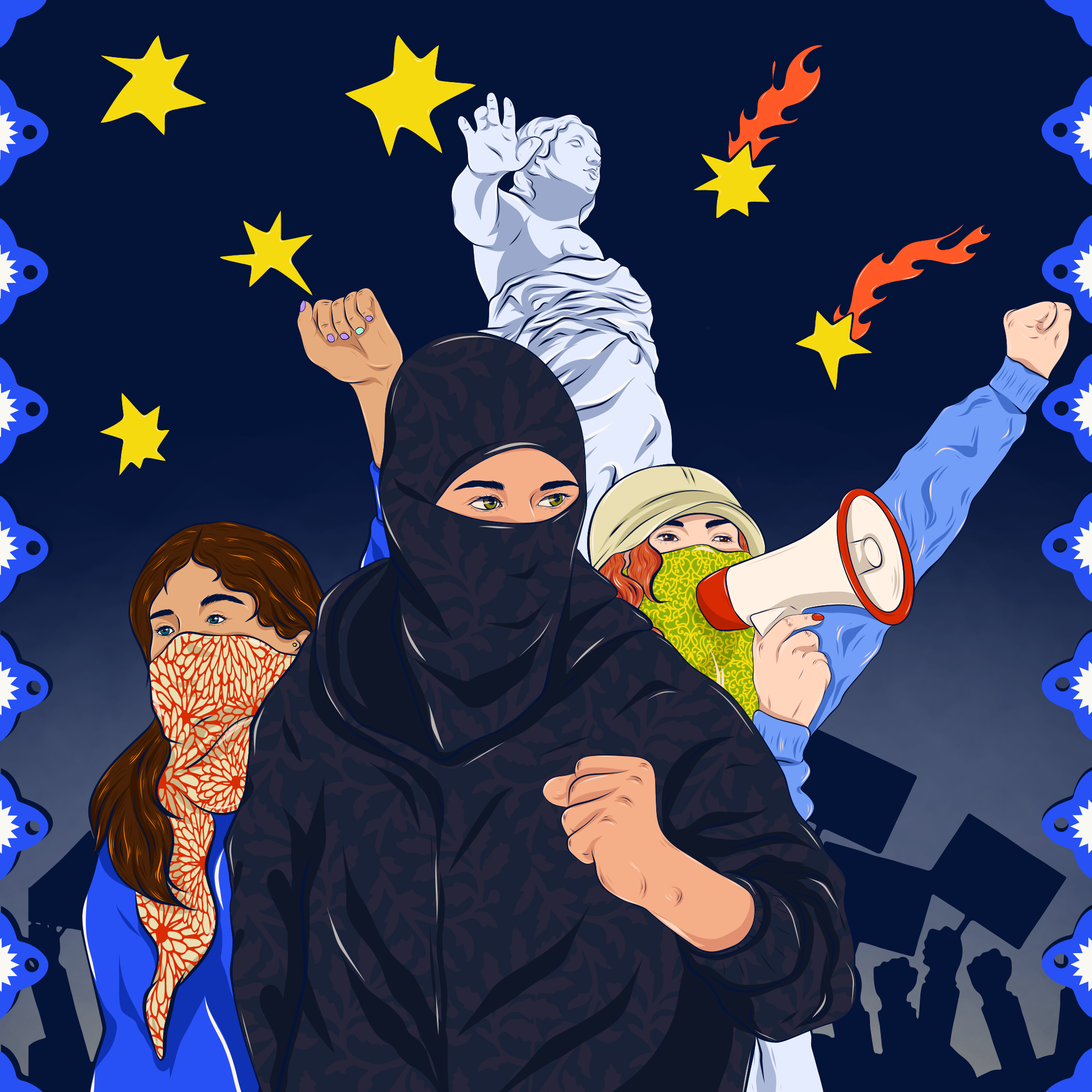
For the past month, sixth form students have been protesting en masse across France in an unprecedented movement. They’ve been blocking access to their colleges and demonstrating in the streets, often accompanied by some teachers and parents. Their demands centre around the practical problems they face on a daily basis: overcrowded classrooms, dilapidated buildings, absent teachers, exhausting timetables… Since the start of the movement, a number of pupils have been injured by the police and some have been taken into police custody. Lucie* has been a youth worker for around fifteen years and works at a youth and cultural centre (MJC) in Rennes. She has taken part in several demonstrations over the past few weeks.
|
|
— RENNE, 8 OCTOBER 2026
|
I’d never taken part in a protest with so many young people before. Here in Rennes, we saw an unprecedented mobilisation. I think there were 10,000 of us.
The atmosphere was brilliant, there were lots of performances, dancing, and people singing. The teachers and all the staff, also rallied round the students. There were lots of adults, including processions of parents. The challenge was knowing how to be there for them, without altering the message they were conveying. The idea wasn’t to overshadow them.
We knew quite a few young people at the demonstration; we also wanted to be noticed, for there to be adults they recognised, to give the impression that we cared about what they were campaigning for. I think it’s important for adults to be there as a reassuring presence.
I personally observed and experienced the authorities, and the police in particular, responding in a way that was completely disproportionate to what was happening. We saw young people being tear-gassed whilst they were simply sitting outside their colleges. They were demonstrating really very peacefully.
|
| |
It was often when the police arrived that things kicked off.
|
| |
|
I personally observed and experienced the authorities, and the police in particular, responding in a way that was completely disproportionate to what was happening. We saw young people being tear-gassed whilst they were simply sitting outside their colleges. They were demonstrating really very peacefully.
You expect to see those young people who are already quite politically aware or involved in political movements elsewhere, at these demonstrations. But this time, the movement brought together other young people, including those who aren’t necessarily politicized. Some weren’t in favour of the blockades at the start of the week, they said: ‘Yeah, but no, it’s not… it’s wrong, we can’t get to our classes.’ But they changed their minds as the week progressed, after meeting other young activists who’d also been tear-gassed whilst just sitting on the ground, and that changed their perspective.
It’s heartwarming to see that they’re also becoming aware of their place in society, that they have influence, and that their voices can be heard. It was quite impressive to watch, outside our college this morning. Sometimes, when there are blockades, students don’t even turn up. They know it’s blocked and don’t come. But this time they came and gathered together, alongside the teachers. And it wasn’t just pupils from the general stream, but also those from vocational streams, and from schools that don’t usually take part in protests.
There is a certain sense of solidarity. The school where I work, is a school… with quite a good reputation. But they show considerable solidarity with other schools that don’t enjoy the same teaching conditions, or who have foreign students.
|
| |
So, young people are joining forces to make their demands heard.
|
| |
|
Among these demands are issues relating to their school life. There are very practical concerns, such as the fact that there was no toilet paper, for example, in the toilets – that essential supplies were missing. There is also the issue of their timetables: days running from 8 am to 6 pm non-stop, which are completely overloaded. Some young people say they don’t have time to eat in the canteen.
They also spoke about classes being far too overcrowded. There are classes of 48 pupils at the college next to where I work. The pupils also spoke at length about their mental health, saying that they feel quite isolated and anxious about their future.
What worries me is the government’s response – for example, fast-tracking the ‘rioters-pay’ bill (On 16th September, the government presented a new ‘rioters pay’ bill, setting out a new civil liability regime that could potentially make anyone taking part in gatherings during which damage is caused liable to penalties and held responsible, editor’s note) rather than listening more closely to what they have to say.
These young people don’t feel listened to at all; in fact, they feel patronised. Some of them told us that they’d met with the local council, I believe, and the local education authorities, and that it had gone very, very badly. Their demands were completely ignored, and the focus was solely on the acts of vandalism that had taken place.
That’s not what I saw at the protests. For every burnt bin shown on the news, I saw young people dancing outside their college this morning. I saw young people from very different backgrounds coming together on certain issues and taking a stand. And they’re also young people who’ll be able to vote before long. It has made me feel much more reassured about the future.
|
|
|
|
|
🛠️ Resources to help you take action
|
🇫🇷 The SAF – the French Lawyers’ Union – has published a leaflet which in a few lines summarises the rights of all secondary school pupils taking part in demonstrations when they are stopped or arrested by the police. It contains some very practical advice. – The Collective Legal Team and the Anti-Racist Legal Team also provide invaluable support on how to respond and how to access a lawyer if you’re stopped. 🗞️ The Student Union equally, has summarised the secondary school pupils’ demands in 10 points and has made a campaign kit available on its website. 🇧🇪 There is also a Legal Team in Belgium. 🇮🇹 And in Italy, the Hub di protezione offers legal support to protesters.
|
|
|
| |
|
Our picks
|
|
A novel and essays on young people taking action
|
Juliet Drouar’s novel “Cui-Cui” transports us to 2027, where minors have the right to vote but still suffer violence at the hands of adults, including their own parents. It’s through their own spaces for expression and resistance that young people are mobilising to defend their rights, all conveyed through explosive and inventive writing that had me hooked from start to finish. (only in 🇫🇷)
|
— Recommended by Morgane, translator
|
|
|
|
|
|
|
— Recommended by Christelle, artistic director, and Margot, project manager
|
|
|
|
|
“This may well be the most politically engaged generation since May ’68,” explained Lennie Stern, a historian and communications adviser for the newspaper Marianne. And her book “Teen Spirits: Inside the Minds of a Misunderstood Youth” is a valuable resource for understanding the ways in which this generation protest and the causes they champion. (only in 🇫🇷)
|
— Recommended by Hélène, journalist
|
|
|
|
|
See you on the 28th October!
|
Do you have any questions about the newsletter, reactions to the subject or recommendations you would like to share with us? You can write to us in reply to this e-mail or at [email protected]. See you on the 28th October for the next issue.
|
|
|
|
|
|
|
|
|
You received this email because you signed up on our website.
Unsubscribe
|
|
|
|
|
|