N°83 — A troll in my home
|
|
|
 |
© Anna Rabko — Sphera Network
|
|
|
|
|
Poland has taken in nearly a million Ukrainian refugees since the Russian invasion in 2022. But this solidarity goes hand in hand with a sharp increase in strong anti-Ukrainian sentiment, whose origins predate the conflict. Our Polish partners within the Sphera network, Krytyka Polityczna, interviewed Ukrainians who settled in the country both before and after the war, and the conclusion of their report is unequivocal: all those interviewed had experienced aggression or microaggressions because of their nationality, and half stated that the situation had worsened in recent years. Aleksandra, who works at Krytyka Polityczna, has observed this shift within her own family. She is now seeking a way to combat the growing hostility on social media and at home.
|
|
— WARSAW, 26 SEPTEMBER 2026
|
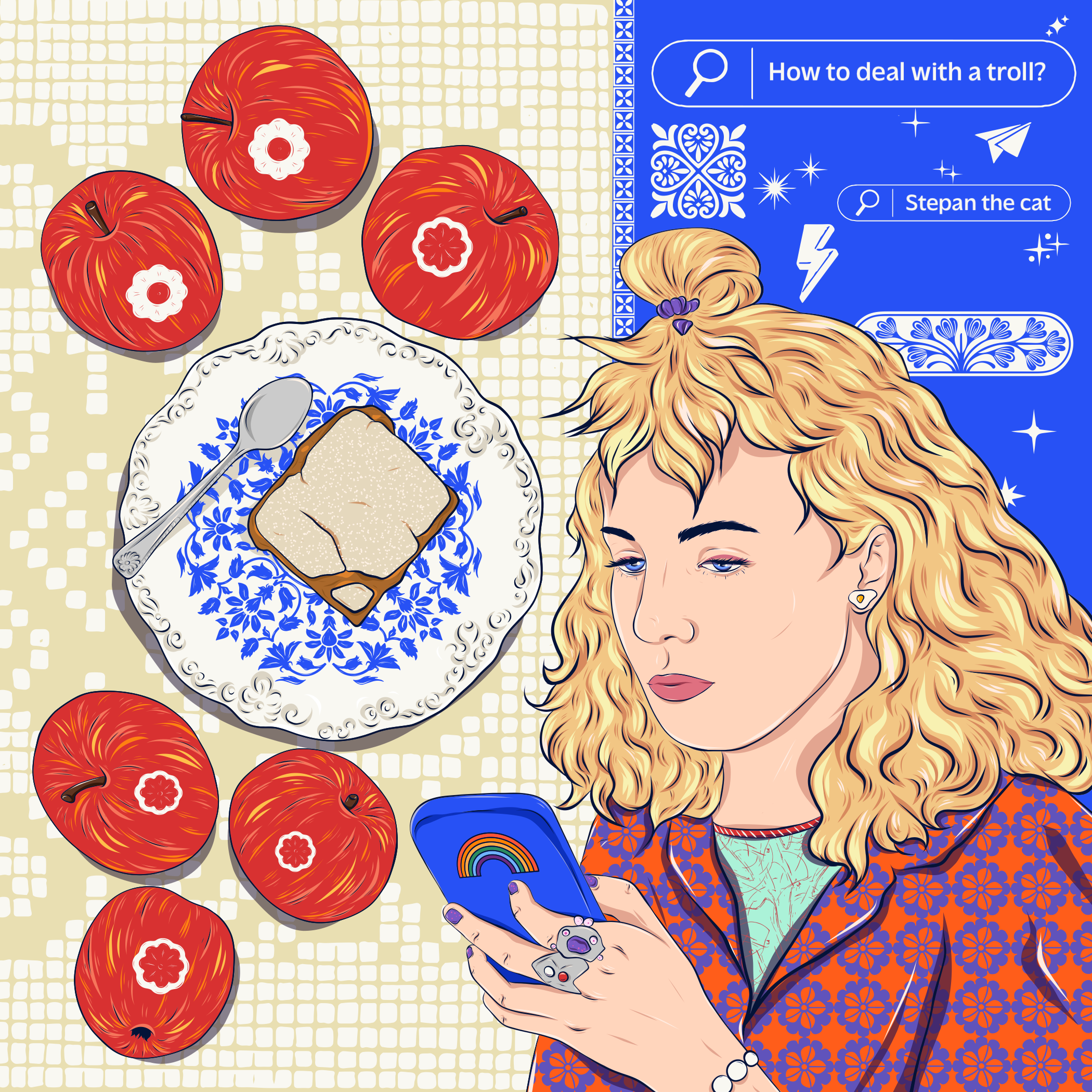
Stepan is a common Ukrainian name. So when I made a short video about the story of Stepan the cat (a Ukrainian cat, who became famous on social media during Covid and now has 1,6 M followers on Instagram, editor’s note) I never imagined I would be bombarded with a tidal wave of furious, absurd comments.
I shouldn’t have said anything about any Stepan. In Poland, Stepan is quickly associated with the last name Bandera, and here, Bandera has one very clear association: crimes against the Polish population (Stepan Bandera was a Ukrainian nationalist leader who orchestrated deadly attacks against Poles with the Ukrainian Insurgent Army –UPA– and collaborated with the Nazi regime, editor’s note). So even a tiny kitten can infuriate Poles.
But I don’t believe that anyone in the world actually thinks that Stepan the cat from the Ukrainian meme exists to promote Stepan Bandera. It amuses me more than it hurts. But the ratio of pain to laughter changes when I see my father.
“Those are just troll comments, let it go,” my friends tell me. But it’s harder to let it go when you have a troll in your own home. You never know when a conversation about The Beatles over szarlotka (traditional Polish apple pie, editor’s note)will suddenly turn into: “Have you heard…?”
My teaspoon becomes warm and sweaty in my hand as I grip it harder and harder. “Have you heard what the Ukrainians in Poland are up to?”. Apple pie doesn’t taste quite as good when, with every bite, you’re hearing details of the Volhynia massacre (The UPA murdered 100,000 Polish civilians between 1943 and 1945 to establish an independent Ukrainian state that would include the Volhynia region, editor’s note).
|
| |
So many arguments, so much tension. This time, I do what a Gen Z would do: I lock myself in the bathroom and ask strangers on Reddit for advice.
|
| |
|
“Delete Facebook from his phone”
“I’m from Belarus, and it’s the same in my family. Ignore him”
“Volhynia, the UPA and Bandera are ’6-7’ for middle-aged Polish men who have nothing better to do”
But there is also another connection to the nonsensical “6-7” meme. According to a poll conducted for the newspaper “Rzeczpospolita”, 67% of Poles support deporting Ukrainian men from Poland. There is irony to this as only 27% of Poles said they would go to the front in the event of the war.
I angrily devour the szarlotka. It’s hard to listen to a litany of complaints about Ukrainians when the number of crimes against Ukrainians is on the rise in my country. Two months ago a 54-year-old man in Bielsko-Biała verbally abused an 11-year-old Ukrainian girl on a bus. “Anti-Ukrainian sentiment” in Poland is talked about as if it were coming out of nowhere, like clouds darkening over the country. And yet those clouds have a face –my father’s for one, a man who bakes szarlotka and talks to me so sweetly about his favorite album, “Let It Be”.
To cope with this, I follow the people on line who are fighting back. They’re up against Russian trolls, bots and Poles repeating their narratives. After another argument with my father, I find a Facebook group with more than 3,000 members –Polish Troll Farm. I read in the group description: “Enough! It’s time to take back the internet and fight the sewage that spills out, for example, under every post about Ukraine or the war with Russia. […] They spill out from the comments under posts and into people’s heads. It’s high time to do something about it.” A small group of people fighting like ants against a deluge of chemicals.
I wrote to the “Head Troll”, Jan, who hides behind a fake account. Fighting disinformation is his second life.
|
| |
“Even if we don’t have the same resources as the Russian propaganda machine, everyone should do whatever they can to counter it. I also believe in the power of communities, and in the fact that social media can be used for something good as well.”
|
| |
|
And they’re becoming increasingly effective. More and more often they manage to block Russian troll profiles. “Unfortunately, this is still just a drop in the ocean. Without changes to regulations that would force platforms to systematically detect and remove fake accounts that aren’t operated by real people, fighting this is extremely difficult.”
He also thinks that the Polish media should take more responsibility. “Every online forum, including social media platforms, needs moderation. No exceptions. Without moderation, sooner or later, any forum could be taken over by bots”, Jan writes to me.
Sometimes I participate in their “actions”, but it’s not enough for me. I feel like doing something more radical. For the first time in my life, a heterosexual fantasy pops into my head, with a strange feeling of fear and satisfaction: I should marry a Ukrainian man. Then bring him home, stand next to him in front of my father and his szarlotka, put on The Beatles and wait for the apology.
|
|
|
|
|
🛠️ Resources to help you take action:
|
🇵🇱 Since 2014, Demagog has been combating online disinformation in Poland through fact-checking and publishes the results of its work on its website to help citizens distinguish fact from fiction. 🇪🇸 In Spain, Maladita does the same work, verifying content and statements whose accuracy is called into question. 🇮🇹 In Italy, Facta does the same with topics circulating in the media, on social media and in messaging apps. They also break down their work in a newsletter and a podcast. – Pagella Politica specialises in fact-checking and analysing current political affairs to help readers understand what drives political dynamics, based on figures and facts. 🇫🇷 In France, the organisation Fake Off runs information literacy workshops and training courses for adults to develop critical thinking and combat mass disinformation amongst young people. 🇪🇺 If you’re looking for a fact-checking organisation in another European country, you can visit the members’ page of the European Fact-checking Standards Network.
|
|
|
| |
|
Our Picks
|
A book, some podcasts and a ‘cat-blogger’:
|
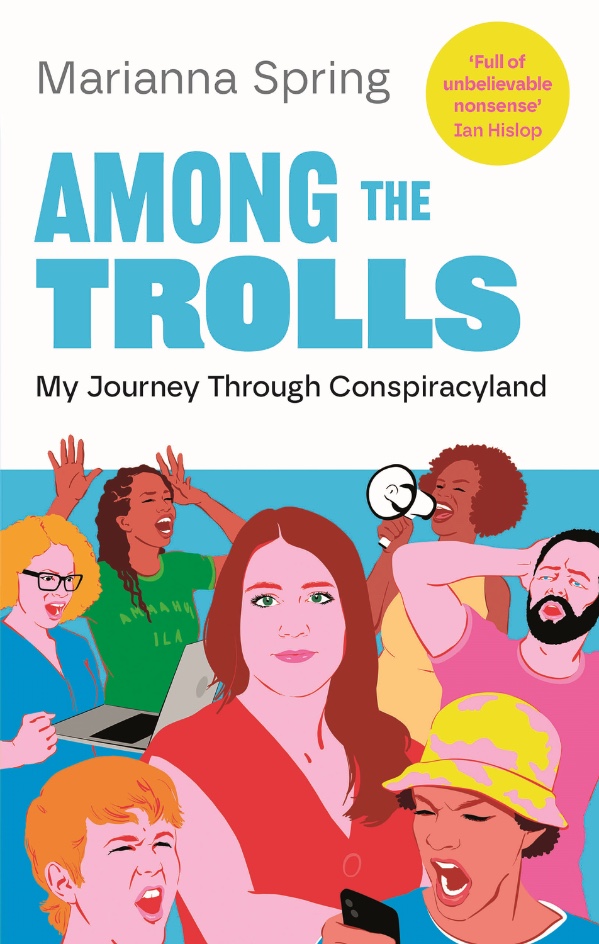
Marianna Spring, the BBC’s correspondent on disinformation and social media, didn’t have any trolls in her home. However, she saw plenty of them on her social media feeds and was receiving far too many messages from them, so she decided to look into the people and machines behind these accounts and, above all, their impact on our physical world- on their victims. Her book “Among the Trolls” and her podcasts “Disaster Trolls”, “Marianna in Conspiracy Land” and “Why Do You Hate Me?” are fascinating.
|
— Recommended by Hélène, journalist
|
|
|
|
|
Should we respond –and if so, how– to sexist, racist and homophobic comments made during a family meal? Seven years ago, in the run-up to Christmas, journalist Victoire Tuaillon invited three female colleagues to her table to record an episode of “Couilles sur la table”, where they shared their techniques and strategies for keeping the conversation going or avoiding such discussions. An episode full of advice that remains relevant today. (only in French)
|
— Recommended by Hélène, journalist
|
|
|
We really ought to dedicate a paragraph of these recommendations to Stepan the cat, the ‘cat-blogger’ behind this story. If you’ve never come across one of his memes, you should know that Stepan is 17 years old, was born in Kharkiv and fled to France with his owner after the war with Russia began. He now has a partner, Stepania —who, of course, has an Instagram account as well. And his photos on Instagram, sitting at the table enjoying a tasty meal or a nice beverage, delight 1.5 million followers. Started from the bottom, now he’s here.
|
— Recommended by Hélène, journalist
|
|
|
|
|
See you on the 30th
|
Do you have any questions about the newsletter, reactions to the subject or recommendations you would like to share with us? You can write to us in reply to this e-mail or at [email protected]. See you on the 30th September for the next issue.
|
|
|
|
|
|
|
|
|
You received this email because you signed up on our website.
Unsubscribe
|
|
|
|
|
|